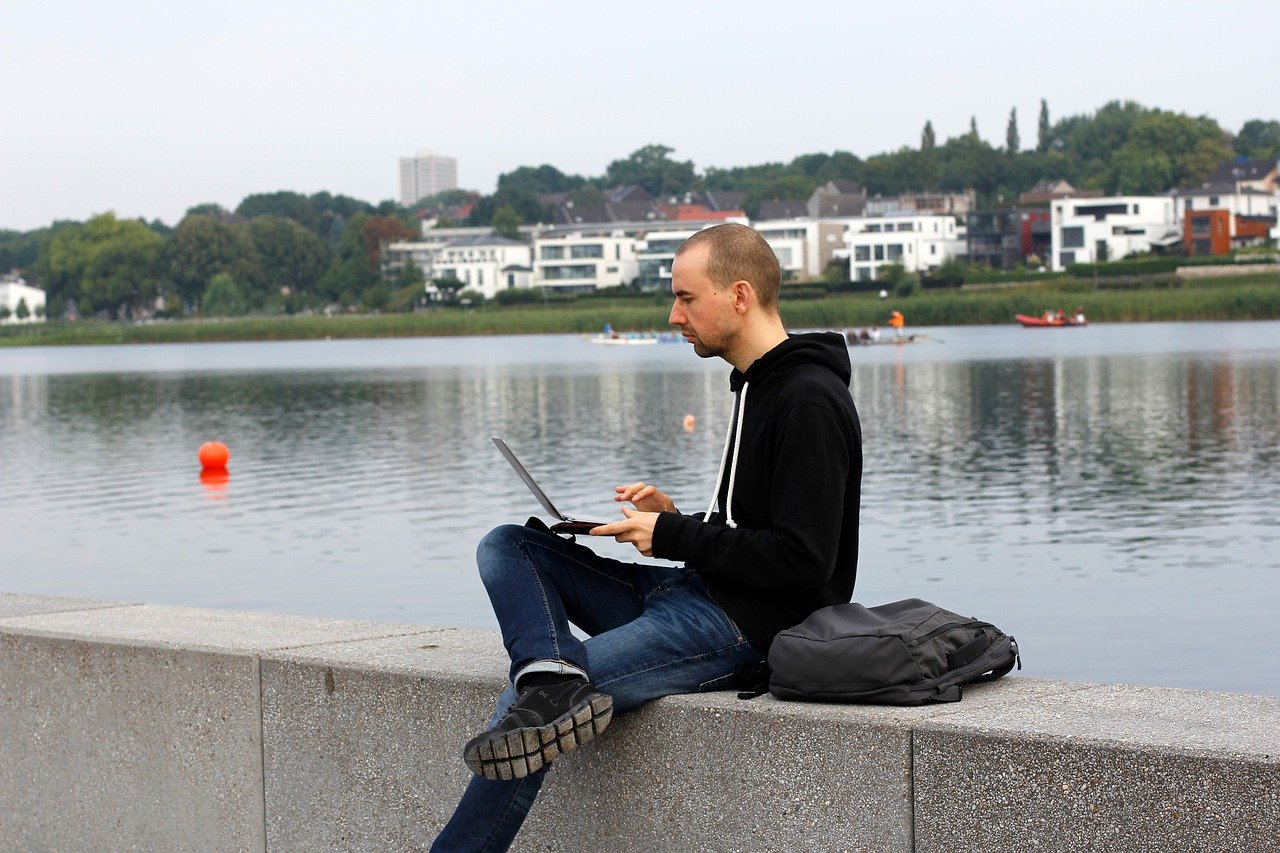
With globalisation, the advance of technology, concerns for sustainability and public health issues associated with the urbanisation of society, remote working has become a more practical and popular model for working.
With the advantage of remote working, there are also a number of challenges to be considered, including:
- Motivation
- Coordination
- Mental health
- Team spirit and group dynamics
- Relationships and trust
- Communication (particularly informal)
- Shared learning and problem solving
But the biggest challenge is by far the “them” mentality of management and peers. There is a common undercurrent of thinking that remote team workers have it easy, being unproductive and undeserving. And yet the opposite is often the case.
Thus I could subtitle this article “Remote teams: How to work with them and how to look after them“ whilst looking to tackle the “them” mentality that is inherent in this title. This is the greatest challenge.
The solutions lie in project management but, particularly, in effective line management.
Agile and Scrum/Kanban
The concepts of Agile and Scrum/Kanban promote the practices of having small groups in close proximity (like a project room) all working collectively in an informal structure towards the delivery of solutions. And yet, ironically, the methods leveraged by these philosophies can help us solve the challenges of remote working teams.
The daily stand-up
The daily stand-up is the most important tool for keeping the team of remote workers socialised. With this objective in mind, it is important to make sure that it is not just a dry, task oriented event, but also a social event. It is part of the Good Morning (or Good Evening) of the virtual office.
Daily stand-ups can seem to some people (particularly outside of Software Development) to be an extravagant time incursion, but daily stand-ups help to create visibility of all team members contributions, helping:
- Motivation through visibility
- Coordination of work efforts
- Group problem solving
The greatest challenge with stand-ups is that they become mundane and meaningless, without meaningful discussion. It is the responsibility of the scrum master and product owner to demonstrate interest in the updates from team members and elicit discussion on points of interest. For example, if a particular task continues to not be completed - ask why? Is there anything that anybody else in the group can do to help?
The Scrum/Kanban board (and tickets)
If the most important role of the Daily Stand-up for remote workers is to socialise the team members on a daily basis, then the Scrum/Kanban boards' most important role is to ensure visibility of each team members contributions. This can help particularly with motivation, coordination and communication.
Scrum/Kanban boards can also be leveraged to ensure more meaningful Stand-ups. Rather than following the standard approach of each team member just updating on what they are working on, you can use the Scrum/Kanban boards as an agenda, whereby each ticket is discussed by the person to whom it is assigned. Everybody should have at least one ticket assigned to them, so everybody gives an update (otherwise, what are they doing?). And at the end of the Stand-up, you can discuss whether there are any tickets missing, that should be underway/discussed?
Scrum/Kanban boards are regularly used for planning, assigning, communicating progress, facilitating/tracking discussions, etc. These uses are only more important when managing a team of remote workers who will often be working in differing timezones.
Note: A key to effective use of Scrum/Kanban boards and their tickets is to ensure that communications related to given tickets are captured on the relevant tickets. This often means a cut and paste from an external chat or email thread back to the ticket being discussed. This is important for people not on the chat/email thread and for future reference.
Communication tools
Remote workers need the best communication tools. The fewer the tools, the less the confusion and faster the onboarding. One task = one tool (not many alternatives). And integration of those tools to create a single view of the world is highly desirable.
Here is my preferred list for Agile and Scrum/Kanban run projects:
- Jira = Scrum/Kanban boards and requirements tickets (with Slack integration)
- Zeplin = UX Design Workflow
- Google Docs = Documents and spreadsheets (with Slack integration)
- Slack = Messaging (with Jira integration)
- Zoom = Group video calls (with Slack integration)
- Google calendar = Calendar (with Slack integration)
- Gmail = Email (with Slack integration)
Keep in mind that the fewer the tools, the better. You don’t want some of your team drifting off and using their own tools. This makes communication and group dynamics a nightmare.
Sprint/backlog planning
A critical part of the Scrum/Kanban methodology is Sprint or Backlog planning, in which you plan the next Scrum sprint during the current Scrum sprint or plan the Kanban backlog.
These are critical and regular team socialisation and building opportunities in which you can engage the entire team in the design-thinking of the work that they will ultimately deliver. The importance of these activities is only magnified when you add the need for team socialisation of remote team members.
Breakouts / chats
Topic-specific group phone calls and chats to discuss and/or resolve specific issues are an important substitute for discussions around somebody’s desk.
Encouragement must be demonstrated by project managers, scrum masters, product owners and other leaders to allow team members to initiate and participate in private threads. This will build critical motivation, team spirit and trust among team members.
Line management
As remote workers are not in the office, it is easy to forget them, and yet it is even more important that they get Line Management to do their jobs well and grow as professionals. Thus it is critical to ensure that effective line management is in place to maintain motivation, mental health, healthy relationships and personal growth of remote team members.
Team meetings
Team meetings are a common part of the office routine where team members get updates and direction from their line managers, if not the opportunity to contribute to that direction!
Such opportunities are even more important for remote team members if they are to feel a part of an organisation. That “wasted half hour” every week, fortnight or month can make a huge difference to the feelings and engagement of remote team members.
Other benefits include the opportunity to plan the growth in team capabilities and competencies.
Personal development
Remote team members require training (and time for training) as do office workers. As with office team members, remote team members require a training program and time allocation.
1:1 meetings
Many managers have 1:1 meetings with their staff once a year, at performance review time, to review what the objectives they set last year and to set (and forget) a new set of objectives for this year. This is obviously not management and I don’t expect that you would have read down this far if this is what you intend to do.
The alternative, especially for remote team members, is to have regular 1:1’s with them - either weekly, fortnightly or at least monthly - depending on how inclined they are. I find that Project Managers are the least likely to want a 1:1 whilst programmers from the mediterranean countries are the most likely to enjoy frequent 1:1 attention.
Conclusion
The “them” mentality towards remote team members is the greatest challenge. The tools and approaches above are focused on reducing this mentality, enhancing communication and building a stronger sense of team spirit.